When Security Is the First Face Customers See

When Security Is the First Face Customers See

When Security Is the First Face Customers See

By Sash Gicevski, National Business Manager

In a lot of environments, the security officer is the first person a customer or commuter sees when they arrive, and often the only person they interact with directly. That puts security in a strange position. The job is risk management, but the way it gets judged, by the client and by the public, is customer experience.

I manage accounts across transport, retail, and commercial sites, and this tension shows up on every single one of them. A guard who treats the role as pure enforcement creates friction with the people they're meant to be protecting. A guard with no security instinct at all creates risk. The good ones hold both at once, and that's what I look for when I'm assessing whether a site team is actually performing.

Security is also the first impression

Walk through a busy transit hub or a retail centre and the security presence is usually the most visible role on site. Staff behind counters or in offices are one step removed from the public. Security is standing right there, in the flow of foot traffic, often for hours at a stretch. That visibility is either an asset or a liability, depending entirely on how the officer carries it.

An officer who looks tense or overly rigid makes a space feel less safe, not more. An officer who's approachable, alert, and clearly paying attention does the opposite. Customers and commuters pick up on this instantly, even if they couldn't explain what they're reacting to.

Reading a situation before it becomes one

The best officers I work with aren't waiting for something to go wrong. They're reading body language, noticing who's lingering somewhere they shouldn't be, picking up on tone shifts in a queue or a crowd, and adjusting their own presence accordingly. Sometimes that means stepping forward. More often it means staying visible but relaxed, because de-escalation works best as a default posture, not something reached for only after things have already gone sideways.

This is a trained skill, not a personality trait. Officers need structured, scenario-based training in behavioural awareness and communication under pressure, not just a induction checklist and a uniform.

Consistency across multiple sites

Managing accounts across different sectors means the standard can't drift depending on which site or which shift you're looking at. Real-time incident reporting and rostering systems matter here, not as tech for its own sake, but because they let us catch a drop in standard early, verify that patrols and checks actually happened, and keep every site accountable to the same benchmark regardless of who's on shift that day.

What I actually check for

When I review a site, presence isn't enough on its own. I'm looking at conduct: how the team is interacting with the public, whether they're reading the room, whether they're the reason a customer felt looked after rather than watched. That's the difference between a security contract that just ticks a box and one that actually adds something to how a site runs.

Sash Gicevski is National Business Manager at CPS, responsible for client relationships and account management across CPS's transport, retail, and commercial portfolios.

  • All Posts
  • Cyber Security
  • Data Privacy
  • Industry Insights
  • Insights & Opinion
  • Security news

Keeping Students Safe, Well and Supported: Security in Student Accommodation

Keeping Students Safe, Well and Supported: Security in Student Accommodation

Keeping Students Safe, Well and Supported: Security in Student Accommodation

By Enzo De Santis, National Business Manager

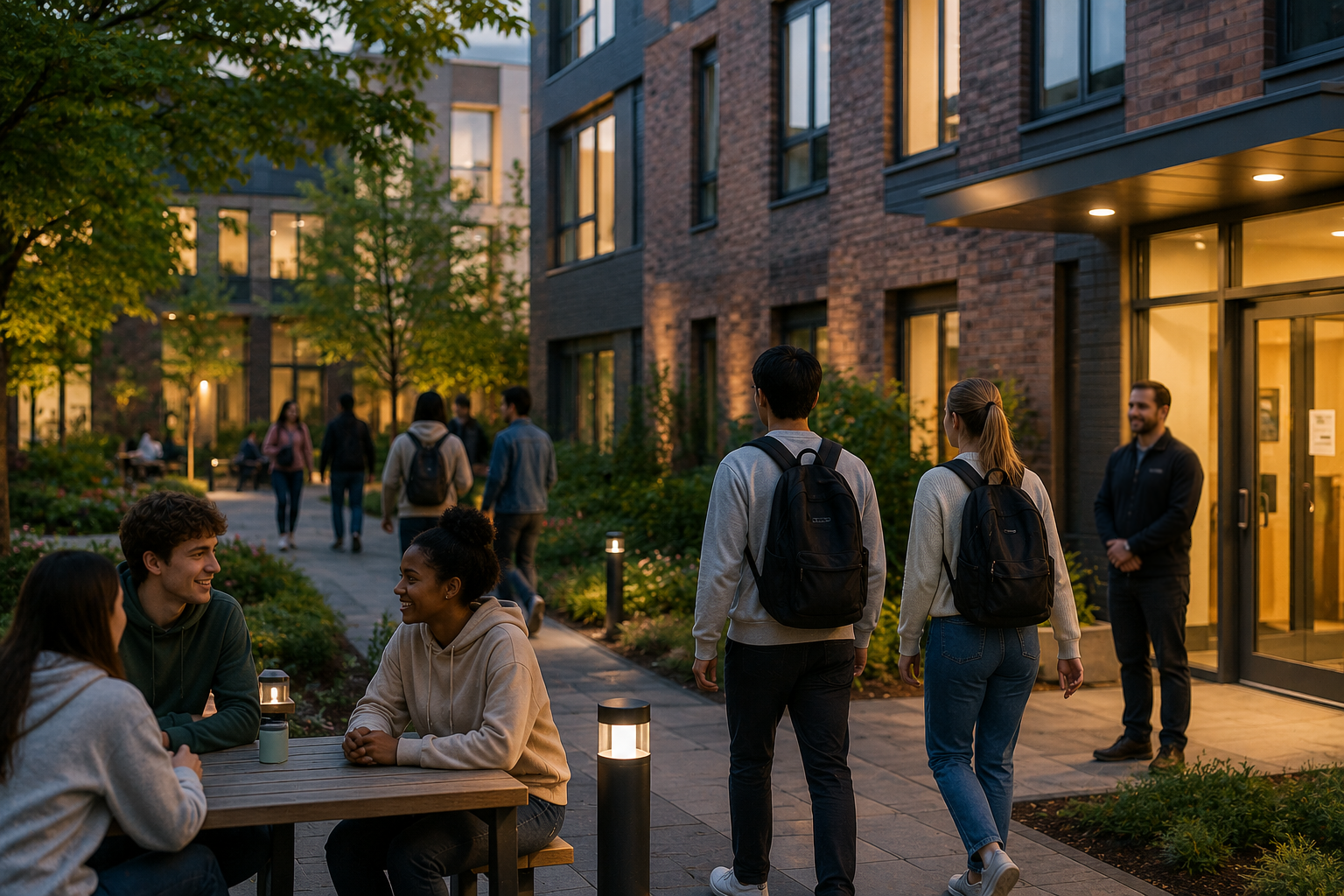
Student accommodation is not like other sites. The people living there are not visitors passing through for a shift or a delivery. It is where they sleep, study, and try to build some kind of normal life, often for the first time away from home. Security in that environment has to do more than watch for problems. It has to make people feel like they can relax.

I work across a number of accommodation sites in my role, and the brief is always the same underneath the paperwork: keep residents safe, and do it in a way that does not make the building feel like it is being policed. Those two things sound like they should be easy to hold together. In practice, getting the balance right is the whole job.

Why student accommodation needs a different approach

Most commercial security briefs are built around access control and asset protection. Student accommodation adds a layer that does not show up on a typical risk matrix: welfare. Residents are often living independently for the first time. They are managing new routines, new relationships, and in a lot of cases, real homesickness. Some of what looks like a security issue on the surface, a resident who will not answer their door, a late-night disturbance, a visitor who will not leave, is actually a welfare issue wearing a security uniform.

Officers on these sites need to read the difference quickly, and respond to each one differently. A locked-door incident and a wellbeing check require completely different responses, and getting that read wrong, in either direction, damages trust fast.

Familiar faces matter more than visible presence

A resident is far more likely to raise a concern with someone they recognise than someone in a uniform they have never seen before. Rotating officers through a site constantly might look efficient on a roster, but it quietly erodes the thing that actually keeps people safe: residents trusting the person at the desk enough to say something before a small issue becomes a bigger one.

We prioritise consistency of staffing on accommodation contracts wherever possible. The same faces, on the same shifts, week after week, so residents build a relationship with the people responsible for their safety rather than just clocking a uniform in the lobby.

Training that goes beyond standard security response

Officers placed in accommodation settings are trained specifically for the environment, not just deployed with a generic security brief. That means recognising early signs of distress, knowing when a conversation needs to happen instead of an incident report, and understanding how to de-escalate situations involving young people who may be anxious, intoxicated, or simply overwhelmed, without making things worse.

It also means knowing where the line sits. Officers are not counsellors and are not trying to be. Their job is to notice, respond appropriately, and escalate to the right support, whether that is building management, a residential advisor, or emergency services, rather than trying to manage every situation themselves.

Good security in student accommodation is largely invisible when it is working. Residents feel safe enough not to think about it. That only happens when the people on the ground understand that their job is about people first, and procedure second.

Enzo De Santis is National Business Manager at CPS, responsible for client relationships and account management across CPS's education, accommodation, retail, and commercial portfolios.

  • All Posts
  • Cyber Security
  • Data Privacy
  • Industry Insights
  • Insights & Opinion
  • Security news